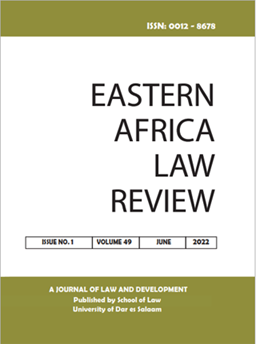
The Basic Structure Doctrine and Constitutional Restraint in Uganda: The "Age Limit" Case
The Eastern African Law Review
##common.published##: October 09, 2022
215
Article Views
All time
359
Downloads
All time
0
Citations
Source: OpenAlex
Activity (views + downloads) over time
Citations by year
No citation data available yet.
Abstract
This Article discusses the scope and application ofthe Basic Structure Doctrine, against thebackground of the judgment of the ConstitutionalCourt and Supreme Court of Uganda in the case ofMale Mabirizi Kiwanuka and Others v. AttorneyGeneral, wherein the two courts found that anamendment to the Constitution of Uganda removingthe "age-limit" qualification to stand for presidentdid not violate the Doctrine and was valid. It isargued that given Uganda ' s political history theclause, which was designed to prevent the sittingpresident from taking advantage of his incumbencyto perpetuate himself in power, was part of thebasic structure of the Constitution. As it was, theimpugned amendment removed the last measureagainst a life presidency, and is a recipe forinstability. The court decisions were a missed opportunity to assert the power of the Judiciary asthe foremost defender of constitutionalism and therule of law.Key words: Basic Structure, Constitution, Constitutionalism,amendment, age-limit, life-presidency.