International Arbitration on Investment Disputes in Natural Wealth and Resources Sector in Tanzania
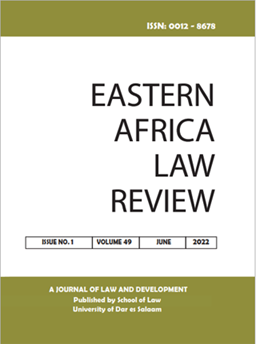
The Eastern African Law Review
##common.published##: October 09, 2022
311
Article Views
All time
482
Downloads
All time
0
Citations
Source: OpenAlex
Activity (views + downloads) over time
Citations by year
No citation data available yet.
Abstract
This article analyses rules relating to international arbitrationin natural wealth and resources sector under the newlyenacted Arbitration Act of 2020 of Tanzania. The Act isenacted to facilitate amicable settlement of disputes outsidethe court system as well as enforceability of arbitrationagreements. In a broader framework, the Act responds to thechallenges faced by Tanzania in managing and addressingmany issues emerging in arbitration cases especiallyinvestor-state arbitration. Such reforms are not uniquelyTanzanian but form part of the larger emerging reforms ininvestment regime in key strategic economic sectors in mostof the developing world. This is reflected within the ongoingUN Commission on International Trade Law (UNCITRAL)working group on reforming the investor-state disputesettlement system.Under the new law, all disputes involving natural resourcescan only be arbitrated in Tanzania, as a seat of arbitration,whether under the auspices of the bodies established inTanzania or otherwise. Likewise, all disputes arising fromextraction, exploitation or acquisition and use of naturalwealth and resources can only be adjudicated in accordancewith the laws of Tanzania. To this end, the Act complementssimilar relevant provisions under the Natural Wealth andResources (Permanent Sovereignty) Act and the NaturalWealth and the Resources Contracts (Review and ReNegotiation of Unconscionable Terms) Act of 2017. TheArbitration Act 2020 is aimed at creating a viable regime whichwill encourage alternative dispute resolution and establish aconducive framework for the enforcement of arbitral award.This paper analyses the Arbitration Act 2020 whether itcomplies with the best international practices in arbitrationregime. It also argues that limiting seat of arbitration and thegoverning law of international arbitrations on disputes innatural wealth and resources sector are significant reforms tothe existing investments landscape in the sector in Tanzania.They form a part of the larger picture of emerging reforms ininvestment regime in key strategic economic sectors in mostof the developing world. As a capital importing state,Tanzania, like other developing nations, seek to avoid theperceived frustrations of international arbitrations to obtain afair deal on investment agreements on her natural resourcesthrough an effective arbitration regime and foreigninvestments. Indeed, these reforms are likely going to bringback many Tanzanian cases from abroad to Tanzania as asafe seat of arbitration.Key words: International arbitration, seat of arbitration,governing laws, natural wealth and resourcessector, Bilateral Investment Treaties (BITs).