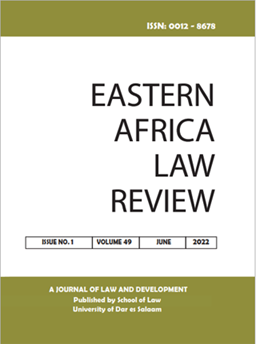
Domestic Prosecution of International Crimes in Tanzania: The State of the Law
The Eastern African Law Review
##common.published##: October 09, 2022
308
Article Views
All time
709
Downloads
All time
0
Citations
Source: OpenAlex
Activity (views + downloads) over time
Citations by year
No citation data available yet.
Abstract
This article examines Tanzania ' s ability to domesticallyprosecute international crimes following its ratification ofthe Rome Statute. The Article also analyses the possibilityof relying on the provisions of customary international lawto prosecute these crimes in the absence ofdomestication of the Rome Statute. The article probesinto the reasons for the non-domestication of the Statute,highlights the strengths and weaknesses of the currentlegal framework to prosecute international crimes, andproffers a set of recommendations for the identified legalflaws. It finds that although Tanzania is a State Party tothe Rome Statute, it has not yet domesticated the Statute.Despite the absence of a direct legal obligation todomesticate or nationally incorporate the provisions of theRome Statute, the articles states that it is fundamentalthat Tanzania indicates its ability and willingness to prosecute international crimes within its domestic legalframework. While there are two approaches toprosecuting crimes of the Statute at the national level, thisarticle has discussed the effectiveness of Tanzania ' s legalframework to prosecute those crimes through the ordinarycrimes approach. It contends that while some of the corecrimes can be prosecuted domestically and throughcustomary international law, the current domestic legalframework in Tanzania is incapable of prosecuting theStatute ' s core crimes effectively in the absence ofdomestication or adoption of serious legal amendments inthe relevant domestic legislation.Key words: Customary International Law - International Crimes -International Crimes Approach - Ordinary CrimesApproach - Penal Code - Rome Statute