
Teachers ' Inclusive Classroom Practices: The Role of Self-efficacy and Demographic Variables
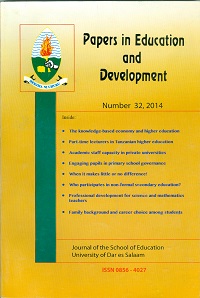
Papers in Education and Development
##common.published##: January 23, 2023
120
Article Views
All time
83
Downloads
All time
0
Citations
Source: OpenAlex
Activity (views + downloads) over time
Citations by year
No citation data available yet.
Abstract
The purpose of this quantitative, correlational study was to examine the role of teachers ' self-efficacy and demographic variables during their inclusive practices. A structuredquestionnaire was used in data collection. The sample of the study consisted of 254in-service teachers from 18 inclusive primary schools in Tanzania. The study founda statistically significant and positive relationship between teacher self-efficacy andtheir inclusive practices. Regression analysis indicated that teachers ' self-efficacy,particularly in instructional practices, as well as teacher demographics (except gender,age, and education) were considered to be significant factors that predict their inclusivepractices. Thus, the study recommends for educational interventions to promote teachers ' competence, self-confidence, knowledge, and skills in order to promote inclusive practicesin schools in Tanzania.Keywords: Teacher self-efficacy, inclusion, inclusive education, studentwith disabilities, and inclusive classroom practices